
Coffee extraction is water dissolving flavor compounds from ground particles. Smaller particles have more surface area exposed — so water pulls flavor out faster. Bigger particles extract slower. That’s the whole game on your countertop: you’re choosing how fast your brew can pull flavor before it starts pulling too much of the harsh stuff.
Burr grinders vs blade “spinners”
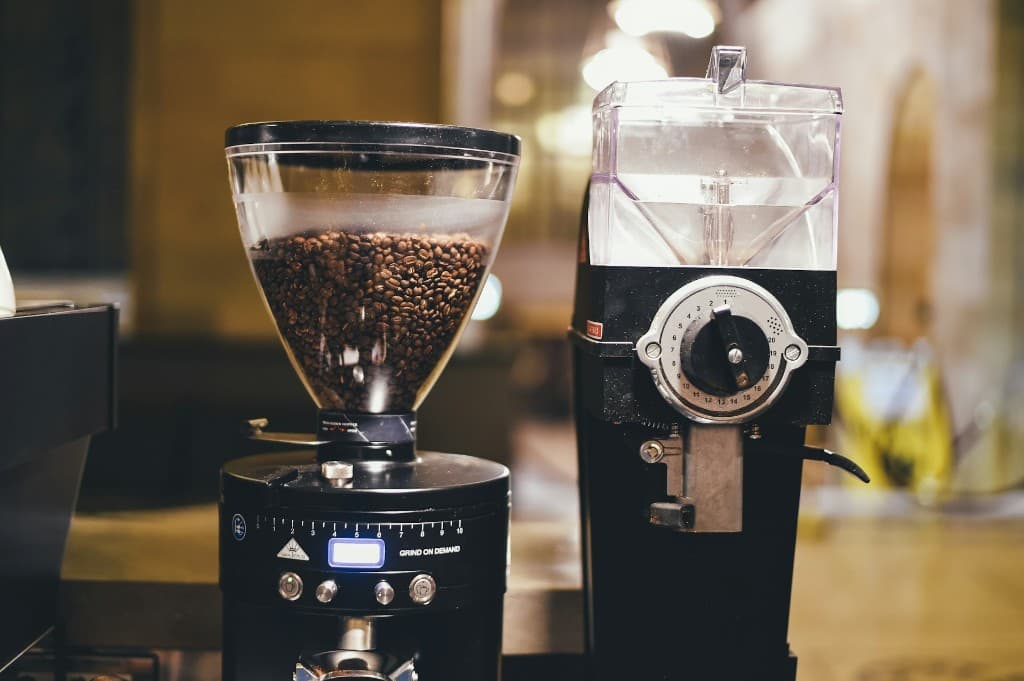
Blade grinders chop beans into inconsistent sizes: some powder, some chunks. The powder over-extracts while the chunks under-extract, and the cup often tastes both muddy and hollow at once. A burr grinder shears beans into a much tighter particle spread, so you can actually steer the brew with predictable changes.
Entry burr grinders are still a real upgrade from a blade. You don’t need a flagship model to make excellent coffee — you need something that’s consistent enough that “one notch finer” reliably means finer across the whole dose.
How to think about “fine” and “coarse”
Numbers on a dial aren’t universal between grinders. Treat them like odometer ticks on your own machine: note where you land when the cup tastes best, not what the internet says “V60 should be.”
- Pour-over (percolation): often lands in a medium-fine to medium zone, depending on roast and roasting style.
- Immersion (French press, long steep): usually coarser, because the brew time is longer and you don’t want to over-extract on fines trapped in the mesh.
- Espresso (if you’re curious): much finer, with pressure doing part of the work — different physics than most home pourovers.
Dial grind by taste
If your brew is bitter, drying, or scratchy, you may be grinding too fine or brewing too long for your method — you’re extracting past the sweet spot. Try a small step coarser and taste again.
If it’s sour, sharp, or thin, you may be grinding too coarse or not giving water enough contact — try a small step finer (or adjust time if grind isn’t the limiting factor).
Move in small steps. Big jumps make it hard to tell what changed, and you’ll chase your tail.
Dosing, freshness, and static
Single-dosing (weighing what you grind, each time) keeps you honest about ratio and avoids stale coffee sitting in a hopper. If your grinder clumps or sprays fines, a light RDT (a tiny mist on beans before grinding) can tame static for some setups — check your grinder maker’s guidance first.
What to read next
Grind only works in context of your brewer — Brew methods breaks down percolation vs immersion. Water ties extraction together on Water & extraction.